Solutions
AI Solutions
Make sense of operational data with MOBIX, Forcelink’s AI assistant. Ask questions, explore trends and identify issues to support your next decision.
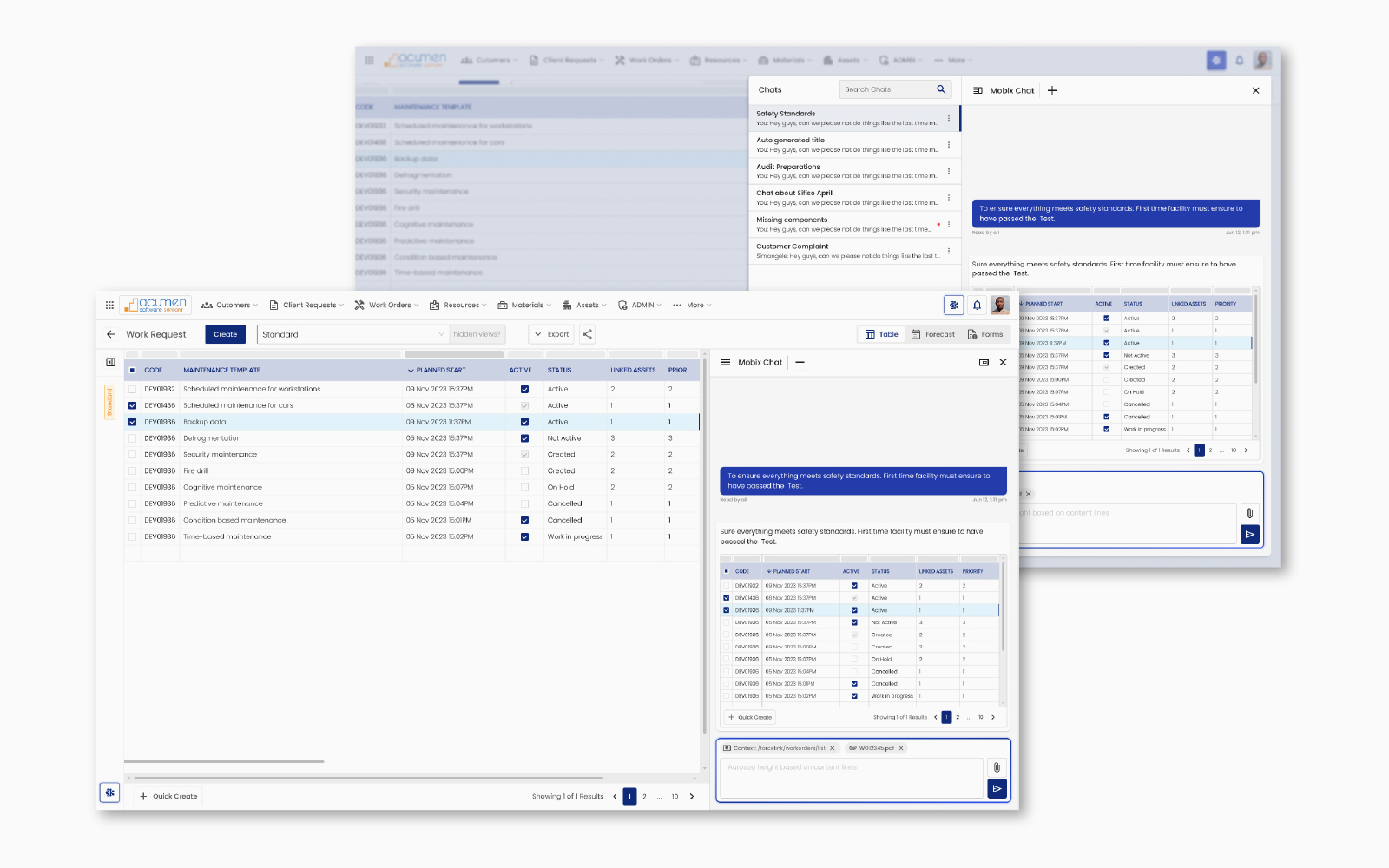
Put your operational data to work.
Forcelink captures a history of jobs, statuses and closures across your operations. MOBIX builds on this information to explain trends, predict outcomes and flag exceptions. Each prediction includes the factors behind it and is checked against simpler statistical models, helping your team assess the results and make informed decisions.
Understand the causes of recurring issues
See the causes behind SLA breaches, re-opens and repeat visits.
Act before SLA breaches
Every new job is scored for risk the moment it is logged.
Detect unusual activity
Flag closures without a plausible site visit, status cycling and unusual costs.
Understand driving factors
Each prediction shows the factors driving it.
324,000 work orders analysed in the first case study · 7 kinds of insight · 1–2 weeks to a data health check
How AI Insights is rolled out
- 1
Data health check, 1–2 weeks
Readiness, data capture gaps and quick wins.
- 2
Diagnostic insight, 2–4 weeks
What drives performance today.
- 3
Predictive models, 4–8 weeks
Breach risk, duration, volume and cost forecasts, anomaly alerts.
- 4
Embedded in operations, ongoing
Scores and alerts at logging and dispatch, with regular retraining.
Analysis runs on a read-only copy of your Forcelink data, with personal information removed or anonymised before modelling. Predictions are probabilistic, and flagged jobs are reviewed by people before action.
Works best with 12+ months of Forcelink history and thousands of work orders.
Key capabilities
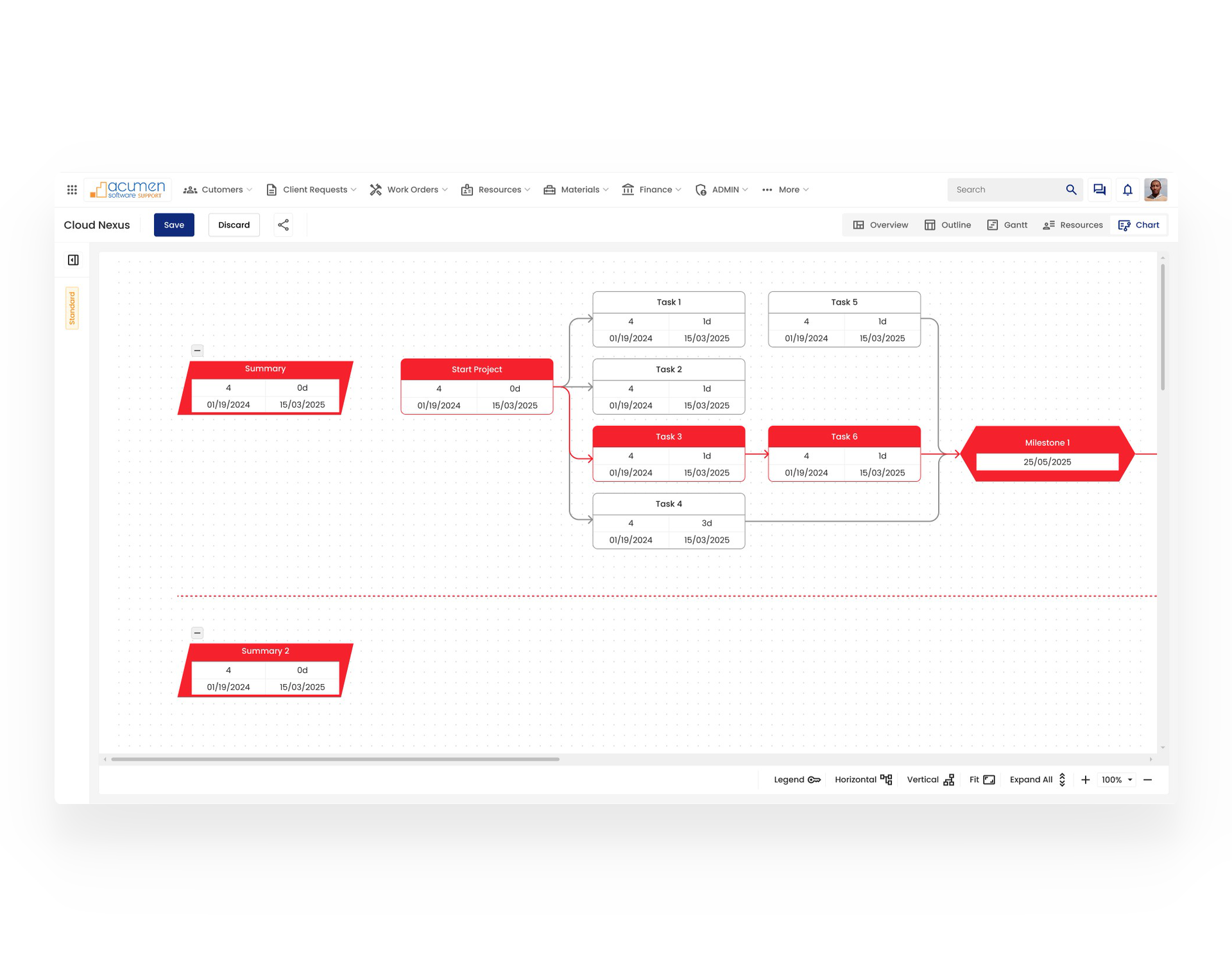
Find out why work runs late
Identify what drives SLA breaches, long resolution times, re-opens and repeat visits, and where time accumulates in the workflow.
Case study
On a large government campus FM contract, four years and 324,000 work orders showed that low-priority jobs breached SLA 75% of the time, against 23% for high priority. Planned durations were set at one hour on 97% of jobs, far from the real work times. The client now knows exactly where to intervene.